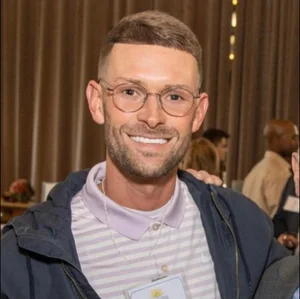
134. A Fall, A Choice, & the Man I’m Becoming
It happened in a split second.
One careless step onto a patch of ice I didn’t see, one shift of balance, and suddenly the ground was gone beneath me. My feet flew forward, my body twisted awkwardly, and before I could even brace myself, I slipped down four concrete stairs and landed flat on my back. The impact stole the air from my lungs. For a moment, I couldn’t breathe, and I couldn’t move. I just lay there on the cold surface, staring up at the gray winter sky, trying to understand what had just happened. The pain came fast and sharp, radiating from a spot deep in my lower back, just to the right of my tailbone and just above my hip. It wasn’t the kind of pain that screams “broken bone.” It was deeper than that. Like something inside me had been yanked, torn, or twisted the wrong way. Every attempt to shift my weight sent a stinging jolt of pain through my body that made my eyes water.
I’ve been through withdrawal. I’ve known what it feels like when your body revolts against you, but this was different. This was sudden, violent, and immediate.
The first day, I was stuck in bed. I don’t mean resting comfortably under blankets with a heating pad and a movie playing in the background. I mean STUCK. Turning over felt like trying to rotate an enormous concrete slab. Sitting up required a slow, calculated negotiation with gravity. Even standing long enough to walk to the bathroom felt like I was dragging a knife through my own spine. There’s something really humbling about being immobilized. Something that forces you to confront your own fragility. I’ve spent a lot of my life trying to appear strong—physically, emotionally, spiritually—but lying in that bed, unable to roll onto my side without wincing, I felt small, vulnerable, and totally exposed.
The next day, I went to the doctor.
Sitting in that waiting room, I found myself replaying the fall over and over in my head. The sound of my body hitting the stairs. The way the pain bloomed across my lower back. I wasn’t afraid of what the X-rays would show—I just wanted clarity. I needed to know whether I’d broken a bone or whether this was “just” muscle. They took the X-rays, and I waited. When the doctor came back into the room, she smiled gently and said the words I was hoping to hear: “No broken bones.” A wave of relief washed over me. “It looks like a pretty bad muscle sprain,” she explained. “Probably some inflammation and strain in the lower back muscles.” A muscle sprain. Painful, yes. Debilitating, yes. But temporary and survivable.
Then came the moment I didn’t anticipate would carry so much weight.
She began talking about managing the pain, about making sure I’d be comfortable while it healed. I could almost hear the familiar names forming before she said them—the medications that have derailed so many lives, including mine. For a split second, my mind went quiet. No one in that room knew my history. No one there knew the hospital beds I’ve lain in before while I was withdrawing from alcohol and drugs. The detox sweats, the shaking hands, the lies, the broken promises, the relapses, and the shame. I easily could have said nothing. I could have nodded politely and accepted whatever prescription she handed me. I could have walked out of that office with narcotics in my pocket, and no one would have questioned it. After all, I had a legitimate injury. Real pain. X-rays to prove it. No one would have known, but I would have known, and that was enough. So, I stopped her. “I just need to let you know,” I said, my voice steadier than I felt, “I’m an addict in recovery from substance use disorders. I can’t take any opiates. I’ll need something non-narcotic.” There it was. Honesty. Simple, direct, and uncomfortable. She didn’t flinch. She didn’t judge. She nodded. “Okay,” she said. “Thank you for telling me, I really appreciate that.”
Just like that, the moment passed. She prescribed two non-narcotic medications to help with inflammation and muscle tension. We discussed rest, ice, and gentle stretching. Then we both went on with our day. For me, it wasn’t just another appointment. It was a line in the sand. Addiction is cunning. It doesn’t always show up in obvious self-destruction. Sometimes it whispers in sterile exam rooms. Sometimes it disguises itself as relief, comfort, and something you “deserve.”
“You’re in real pain,” it might say.
“This is different.”
“This time is medical.”
“You’ve earned it.”
That’s how addiction works. It doesn’t need chaos to sneak back in. It just needs justification, and I had the perfect justification. That’s what made that moment so powerful. Integrity, I’ve learned in recovery, is doing the right thing when no one is watching. It’s choosing honesty even when secrecy would be easier. It’s protecting your sobriety not because someone told you to, but because you finally value it enough to guard it yourself. When I told that doctor that I’m an addict in recovery, I wasn’t performing for anyone. I wasn’t earning a chip in a meeting. I wasn’t writing a column about it (yet). I was protecting my life. There was a time when I wouldn’t have stopped her. There was a time when I would have welcomed the narcotic prescriptions, and maybe even felt grateful for the “opportunity.” There was a time when pain—physical or emotional—was something I ran from at any cost, but recovery has taught me something radical: pain is not the enemy. Avoidance is.
Lying in bed that first night, every shift of my body lighting up that injured muscle, I had time to think. I thought about how different this version of me is from the one I used to be. The old me looked for exits. The new me looks for endurance. I’m not proud of the years I spent numbing everything, but I am proud of the man who sat in that exam room and chose honesty over comfort. Here’s the truth that makes this moment even heavier: sobriety isn’t tested when things are easy. It’s tested when you’re hurting, when you’re tired, and when no one would blame you. That’s when character shows up. There is something deeply emotional about realizing you’re capable of protecting your own recovery. For so long, I depended on meetings, sponsors, counselors, and family accountability. Those things are still essential, but this was different. This was internal. This was me, alone in a room with an option—and choosing the harder path.
Because it was the safer one.
Because it was the honest one.
Because I’ve fought too hard to get where I am right now.
People sometimes misunderstand addiction. They think it’s about willpower, weakness, and making “better choices,” but addiction distorts judgment and convinces you that short-term relief is worth long-term destruction. Recovery rewires you back—moment by moment, decision by decision. That appointment was one of those decisions. When I walked out of the doctor’s office without a narcotic prescription, my back still hurt. I still moved slowly. I still winced getting into my car, but something inside me felt strong—stronger than the pain. I felt aligned, like my actions matched the man I’m trying to become. That alignment is something addiction robbed from me for so many years. I would say one thing and do another. I promised and then broke that very promise. I wanted sobriety and chased substances.
This time, my words and my behavior matched. “I’m an addict in recovery,” and I acted like one. There’s freedom in that. The medications she prescribed aren’t magic. They don’t erase the ache. Healing is gradual. Muscles take time. I’ve had to be patient—stretching carefully, icing regularly, accepting that my body needs rest. Patience is another thing recovery has taught me. Healing doesn’t happen overnight—whether it’s your back or your life.
Sometimes I think about how small that moment might look from the outside. A man declines painkillers. It’s not a big deal for those on the outside looking in, but from the inside, it was monumental because addiction doesn’t announce its comeback with fireworks. It slips in quietly. It waits for vulnerability and looks for openings. Pain is an opening. Stress is an opening. Isolation is an opening, and instead of leaving the door cracked, I slammed it shut. Not dramatically. Not heroically. Just honestly.
I told the truth.
Every sober day is a brick, stacked carefully on top of the last one, and I refused to remove one for temporary relief. Lying back in bed that night, still sore, still limited, I felt something deeper than physical discomfort. I felt gratitude. Gratitude that I am aware enough to recognize risk, that I am strong enough to speak up, and that I value my recovery more than I value numbing pain. That doesn’t make me perfect. It makes me committed.
Recovery isn’t about never feeling pain again. It’s about learning how to feel it safely. It’s about trusting that discomfort won’t kill you—but returning to addiction might. I’m not proud that I’m an addict, but I am proud that I’m in recovery, and recovery showed up for me in that exam room. Sometimes integrity doesn’t look dramatic. Sometimes it looks like an uncomfortable sentence spoken at the right time. “I’m an addict in recovery. I can’t take opiates.” That sentence protected my life. The fall on the ice hurt my back, but that moment at the doctor’s strengthened my spine in a different way. It reminded me who I am. It reminded me of what I’ve fought for. It reminded me that sobriety isn’t just about avoiding substances—it’s about choosing honesty when secrecy would be easier.
My back will eventually heal. The muscle will loosen, and the inflammation will settle, but the confidence I gained from that decision—that stays because now I know something I didn’t fully know before: Even when I’m hurting, I can be trusted with my own recovery, and for someone like me, that realization is worth far more than any pill could ever offer.
This piece was originally written in early January 2026. Since then, I'm happy to say that my back has fully healed from the injuries I sustained in my fall.
And remember, if you’re struggling or know someone who is struggling, please don’t lose hope. If that had happened to me, I wouldn’t be able to help spread awareness today.